Your Steady Ground When Your Mind Isn't
Track mood and medication. Challenge negative thoughts with CBT. Access your safety plan in seconds. 30+ evidence-based tools that turn 2-minute daily check-ins into patterns your care team can act on.
Designed for 20+ conditions — by someone who lives with one
Active Users
Entries Logged
Wellness Tools
Average Rating
30+ Tools. 2 Minutes a Day. Patterns You Can Act On.
Evidence-based tools for the other 167 hours between therapy sessions.
Morning & Evening Check-ins
Start and end your day with structured check-ins. Track mood, energy, sleep quality, stress, appetite, medication adherence, and set daily intentions — all in under 2 minutes.
- Morning mood & energy scores
- Evening reflection & gratitude
- Activity & self-care tags
- +1 more
Mood Tracking
Rate your mood on a 1-5 scale, add notes and activity tags, then watch your patterns emerge over time with beautiful trend charts and calendar heatmaps.
- 1-5 mood scale with emoji indicators
- Optional notes & activity tags
- Trend charts & calendar heatmap
- +1 more
Sleep Tracking
Log bedtime, wake time, sleep quality, and awakenings. See your sleep consistency patterns and how sleep quality correlates with your mood and symptoms.
- Bedtime & wake time logging
- Sleep quality rating
- Awakening tracking
- +2 more
Medication Management
Track daily, weekly, or periodic medications (like monthly injections). Set reminders, log doses, track injection sites, and monitor adherence rates.
- Multiple frequency options (daily, weekly, monthly)
- Injection site tracking
- Dosage history
- +2 more
Symptom Tracking
Track psychotic, cognitive, emotional, behavioral, and physical symptoms. Use preset or custom symptoms, rate severity over time, and identify triggers.
- 5 symptom categories
- Custom symptom creation
- Severity ratings over time
- +1 more
Weight Tracking
ProMonitor weight changes — especially important for those on antipsychotics or mood stabilizers that can affect weight. Visual trend charts show progress.
- Weight entry logging
- Trend visualization
- Date-based history
Side Effects Tracking
ProRate physical, metabolic, cognitive, and emotional side effects daily. Share detailed reports with your psychiatrist to optimize your treatment plan.
- 4 side effect categories
- Daily severity ratings (0-3)
- Notes per entry
- +1 more
Exercise Logging
Log breathing exercises, grounding sessions, and physical activity. Track duration and see how exercise impacts your mood and sleep.
- Exercise type tracking
- Duration logging
- Exercise history
Smart Notifications
Personalized reminders for medication, check-ins, breathing exercises, and planned activities. Gentle nudges that keep you on track without being intrusive.
- Medication reminders
- Morning & evening check-in prompts
- Activity reminders
- +1 more
CBT Thought Records
ProChallenge negative thinking with structured thought records. Document the situation, automatic thoughts, emotions before & after, and develop rational alternatives.
- Situation description
- Automatic thought capture
- Emotion intensity rating (before & after)
- +2 more
Behavioral Activation
ProPlan and schedule meaningful activities across 7 categories. Track completion, rate mood before & after, and measure pleasure and mastery — a core treatment for depression.
- 7 activity categories (physical, social, creative, self-care, productive, leisure, routine)
- Recurrence scheduling
- Mood before/after ratings
- +2 more
Reality Check Tool
ProA guided tool to test whether your thoughts and perceptions match reality. Particularly helpful for managing psychotic symptoms and intrusive thoughts.
- Guided reality testing
- Thought examination
- Reality check summaries
Voice & Sensory Journal
ProLog auditory, visual, tactile, or olfactory experiences. Rate intensity, duration, identify triggers, and track which coping strategies work best.
- 4 sensory experience types
- Intensity scale (1-10)
- Duration tracking
- +2 more
Journaling
ProWrite freely or use guided templates for structured reflection. Multiple journal templates help you process emotions, set goals, and practice gratitude.
- Free-form writing
- Guided templates
- Emotion tagging
- +1 more
Breathing & Grounding
Access box breathing (4-4-4-4), diaphragmatic breathing, and the 5-4-3-2-1 grounding technique. Animated guides help you follow along in real-time.
- Box breathing (4-4-4-4 pattern)
- Diaphragmatic breathing guide
- 5-4-3-2-1 grounding technique
- +1 more
Safety Plan
Build your Stanley-Brown safety plan: warning signs, coping strategies, distraction contacts, help contacts, professional contacts, and environment safety steps.
- 6-step Stanley-Brown model
- Personal warning signs
- Coping strategies list
- +3 more
Warning Signs
ProTrack early warning signs across 5 categories: sleep, mood, thinking, behavior, and perception. Recognize relapse indicators before they escalate.
- 5 warning sign categories
- Active/inactive tracking
- Last checked dates
- +1 more
Day Planning
ProStructure your day with a visual timeline. Schedule activities, set priorities, and build the routine that supports your mental health.
- Daily timeline view
- Activity scheduling
- Priority setting
- +1 more
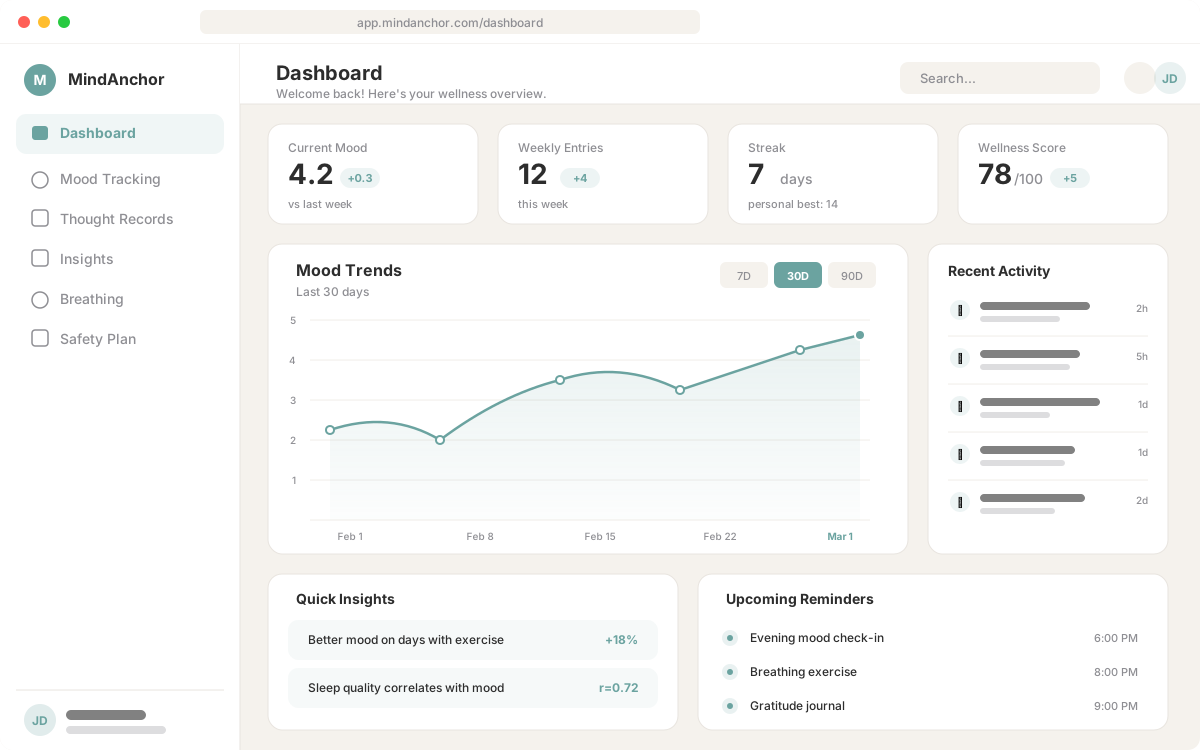
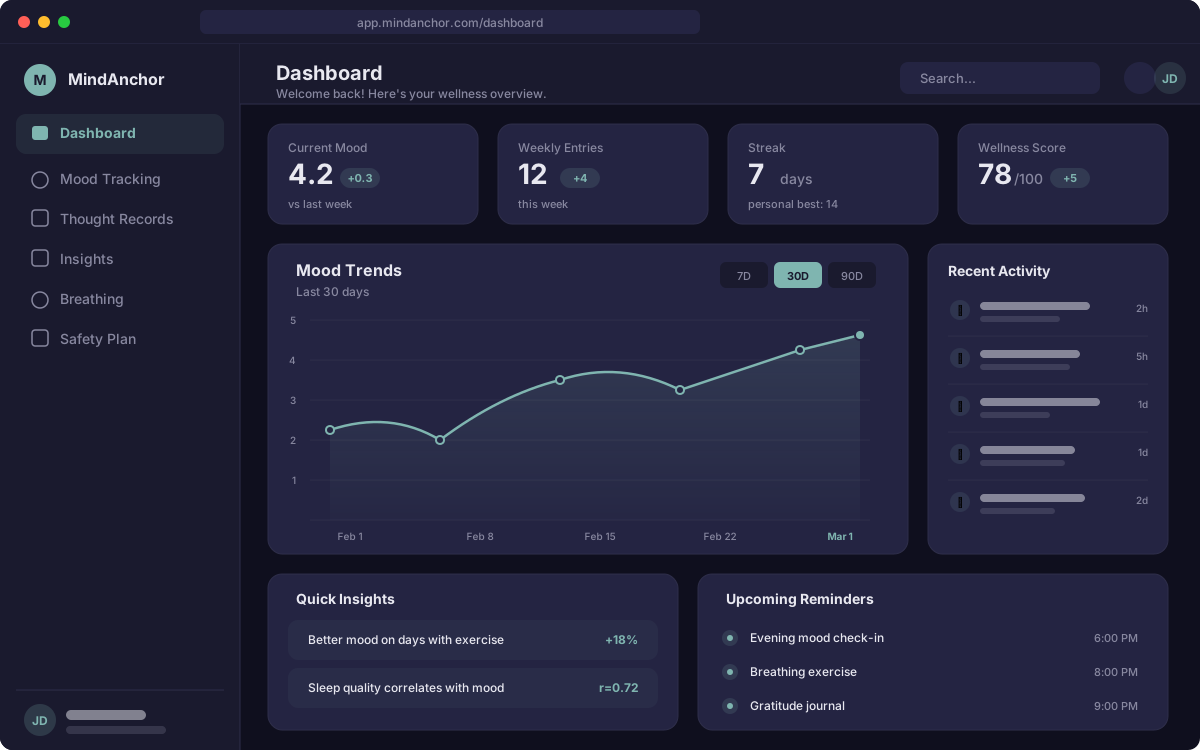
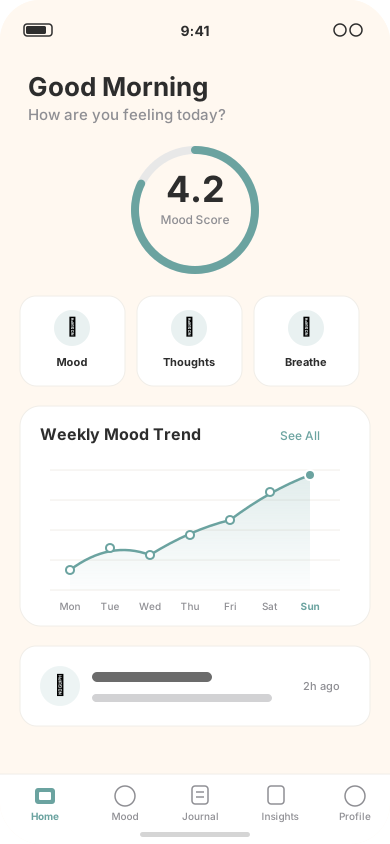
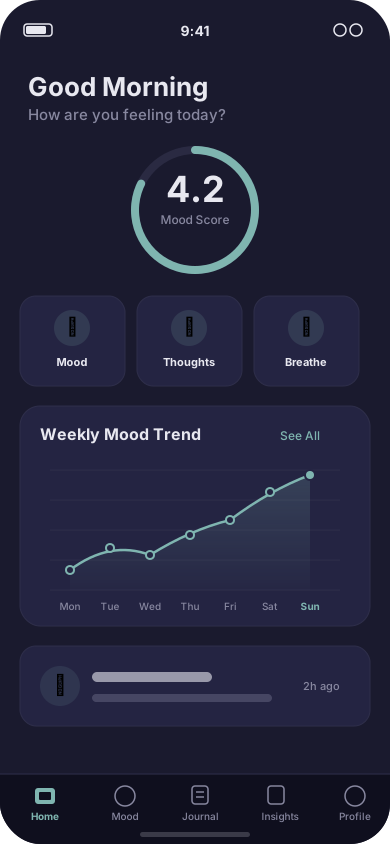
Designed for Clarity and Calm
A thoughtful interface that meets you where you are.
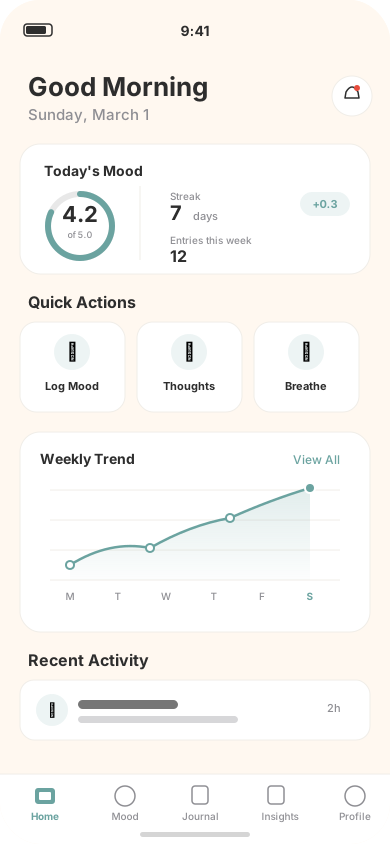
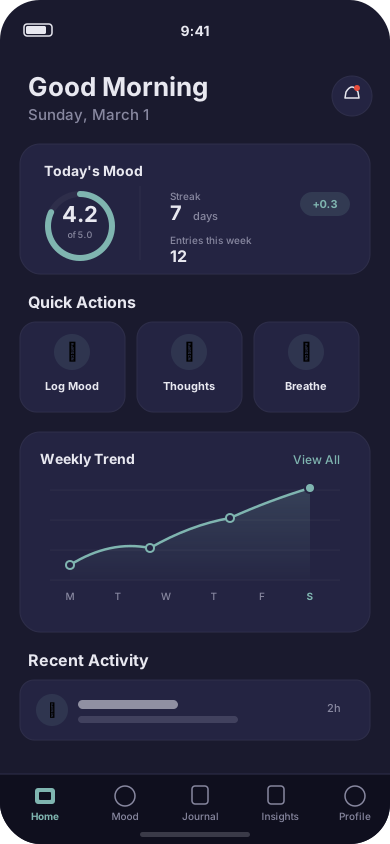
Daily Dashboard
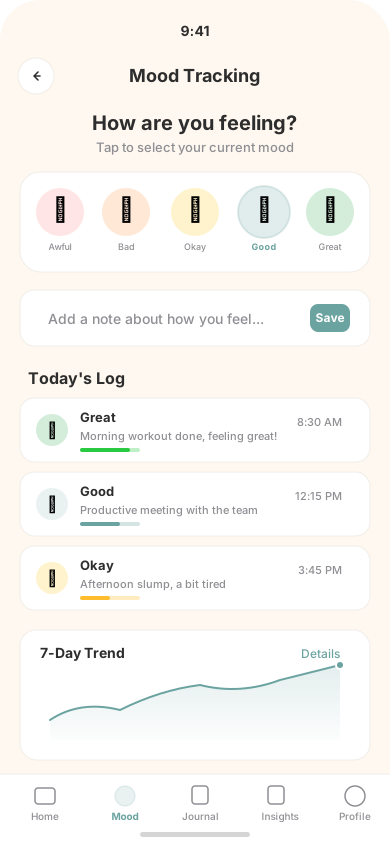
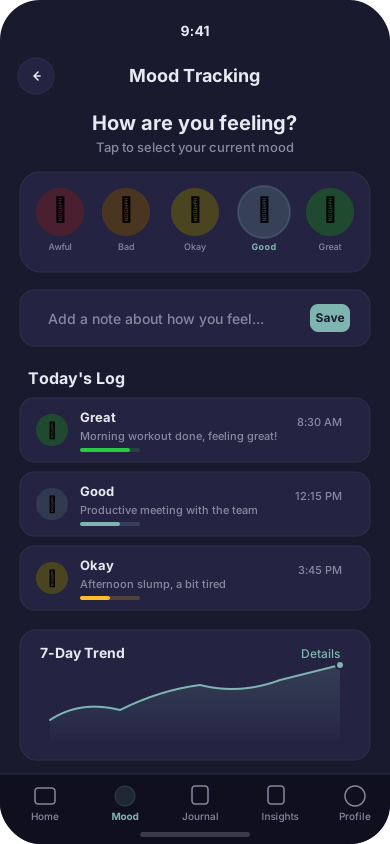
Mood Tracking
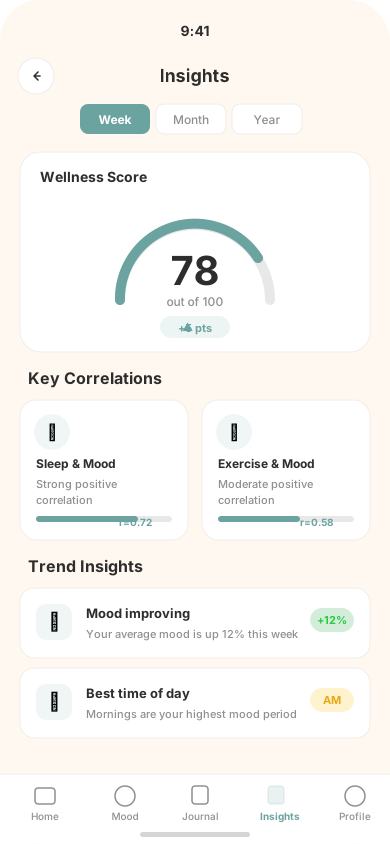
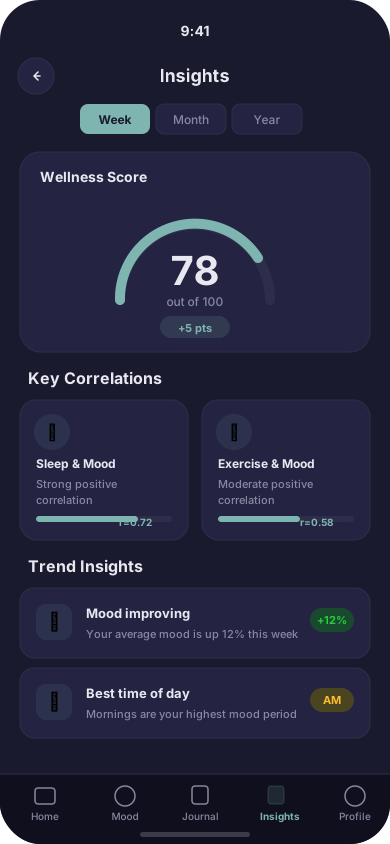
Personal Insights
See MoodStead in Action
Watch how MoodStead helps you build healthier habits.
What Our Users Say
Join thousands of people improving their mental health with MoodStead
"I get a monthly injection and used to lose track of when it was due. Not anymore. Also being able to show my doctor what side effects I had and when? He actually listens more now."
"Some mornings I wake up and things feel off. Like I can't tell what's real. The grounding tool walks me through it without making me feel crazy. I use it almost every day."
"My psychiatrist kept asking "how was your week" and I could never answer properly. Now I just show him the charts. He spotted a bad pattern and changed my meds way faster than usual."
"Sometimes I hear or see things and later I'm not sure if they happened. I started voice journaling right after and it helps so much when I talk to my care team. They can hear my actual state."
"Turns out my sleep goes haywire about a week before a mood episode. I never would have noticed without the data. Now when I see 3 bad sleep nights in a row I know to call my doctor."
"Had a hypomanic episode in November. Went back and looked at my mood chart and you could literally SEE it starting around the 3rd. That kind of awareness is priceless honestly."
"I do check-ins morning and night. On good days it feels pointless but those are actually the days I need it most. When I feel great I want to stop everything - the data keeps me honest."
"My therapist used to spend 15 minutes asking me to recall my week. Now I export a PDF and we skip straight to the important stuff. Way better use of the session."
"I didn't believe scheduling a 10 minute walk would help. But then I could see on the chart that my mood went up after every single one. Hard to argue with that."
"Most days I can barely function. But opening the app and doing a quick check-in takes like 2 minutes and at least I feel like I did something. After 3 months I could see things getting slightly better."
"I go back and read my old thought records when things get dark. Past me wrote down proof that the bad thoughts aren't true. Sounds silly but reading my own words helps more than hearing it from someone else."
"Downloaded probably 6 or 7 mental health apps before this one. Most felt sterile or annoying. This one doesn't nag me and the colors are actually soothing. Still using it 4 months later which is a record for me."
"Middle of an anxiety spiral at work, did the breathing exercise in the bathroom, then wrote a thought record. Took maybe 8 minutes total. Went back to my desk feeling human again."
"I used to lose entire afternoons worrying about stuff that never happened. Now I write it down in a thought record and somehow seeing it on screen makes it shrink. Not always, but most times."
"The data showed me that Sundays are always my worst day. Once I knew that I started planning something fun for Sunday evenings and it genuinely helped. Would not have figured that out on my own."
"The grounding exercise - the one where you name 5 things you see, 4 you hear etc - has pulled me back from the edge more times than I can count. Told my whole support group about it."
"Knowing my safety plan is right there in my pocket makes a huge difference. Had a really rough night last month and the grounding exercises got me through it until morning."
"After a bad flashback I can barely think straight. The breathing guide has this simple animation I can just follow without needing to read or think. That matters when you're panicking."
"Started logging my sleep because my therapist asked me to. Turns out my nightmares cluster around certain dates. Once we saw that pattern she adjusted my meds and things got noticeably better."
"I only see my therapist every two weeks. A lot happens in between. The journal lets me process stuff when it's fresh instead of trying to bring it up 12 days later."
"When an intrusive thought hits I write it in a thought record and look at the actual evidence. 9 out of 10 times the thing I'm terrified of has literally never happened. Seeing that in writing helps."
"I log my compulsion urges like symptoms and rate how strong they are. Watching that number go from 8 to 3 over two months of ERP - that's proof it's working. My therapist was impressed."
"Filling my schedule with activities means less idle time, and idle time is when the rituals get bad. Simple idea but having the app remind me what to do next makes a real difference."
"When OCD tells me something terrible will happen, I pull up the thought record from last time it said the same thing. Nothing happened then. That shut it up pretty quick."
"Never realized how connected my sleep and symptoms were until I could see it all in one place. Bad sleep Monday = bad symptoms Wednesday. Every time. Wish I knew sooner."
"With schizoaffective you've got mood stuff AND psychotic stuff happening and nobody could keep track of both. I log everything here and my whole team can finally see what's going on."
"My mom noticed the warning signs before I did because she checks the app with me. Last time we caught it early enough that I didn't need to be hospitalized. That's huge for us."
"Sometimes I can't tell if it's a mood thing or a psychosis thing. Using the reality check alongside mood tracking helps me sort it out before my appointment instead of during it."
"My therapist pulled up three months of my mood data and showed me patterns I completely missed. We actually use the app together in sessions now. Made DBT way more concrete."
"I check in like 3-4 times a day. At first the swings looked insane on the chart but after a few months you can actually see them getting smaller. Wouldn't have believed it without the data."
"Instead of sending an angry text I open a thought record. By the time I finish writing it out the urge has usually passed. Saved a few friendships honestly."
"The emptiness is the worst part for me. Having a plan for my day - even a loose one - gives me something to hold onto. I swing less when I'm busy with things I actually chose to do."
"Every productivity app I've tried was built for neurotypical people and just made me feel worse. This one keeps it simple - morning check-in, evening check-in, done. I can actually stick with that."
"Went from forgetting my Vyvanse 2-3 times a week to maybe once a month. The reminders aren't annoying which is key because if they were annoying I'd just turn them off. I've done that before."
"Scheduling stuff in small blocks actually works with how my brain operates. 25 min chunks with breaks. It's the first system that doesn't feel like it's fighting me."
"Noticed a clear link between bad sleep nights and the days I can't focus at all. Under 6 hours and the next day is basically wasted. Now I actually prioritize sleep which is not something I ever thought I'd say."
"Thank god this app doesn't track calories or weight loss goals. It tracks how I FEEL. The journaling helps me figure out what's going on emotionally instead of reaching for old habits."
"Writing down "what's the evidence that this thought about my body is true?" is so simple but it stops me in my tracks every time. The evidence column is always pretty empty."
"I share my mood data with my nutritionist and she noticed my worst days line up with specific situations, not food. That shifted our whole approach. Sessions are way more focused now."
"The activity scheduling got me back into painting which I hadn't done in years. Having something I care about that isn't related to food or the gym has been more helpful than I expected."
"Had a panic attack in a grocery store last week. Pulled out my phone, opened the breathing exercise, followed along for 3 minutes. Finished my shopping. That would not have happened a year ago."
"Logged my attacks for a month and realized almost all of them happened before 10am. Showed my doctor and she moved my medication to bedtime instead of morning. Attacks dropped by like half."
"Used the breathing thing on a flight to Madrid. Literally had my phone on my lap following the animation. The guy next to me probably thought I was weird but I didn't have a full panic attack so worth it."
"After each attack I write down what happened. It's not fun but after a while I started seeing triggers I didn't know about. The attacks still happen but they're less often and I recover faster."
"Started with "say hi to the barista" as my weekly goal. Sounds pathetic but I rated my anxiety each time and it actually went down. Now I'm up to making small talk. Progress is progress."
"I was convinced everyone at work thinks I'm weird. Did a thought record and realized I had zero actual evidence for that. It's just a story my brain tells me. Doesn't fix it completely but it helps."
"Started doing the breathing exercise before meetings. Then I rate my anxiety after. Went from averaging a 4 to about a 2 over three months. Nice to have actual numbers to see the change."
"After a party I used to replay every awkward thing I said for days. Now I journal about it instead and write what ACTUALLY happened vs what my brain says happened. Usually it wasn't that bad."
"Been through Headspace, Calm, Daylio, Bearable, you name it. This is the first one that feels like it was made by someone who's actually been through it. Not just a wellness company trying to monetize mindfulness."
"Little thing but the dark mode is great for 2am when I can't sleep and want to do a check-in. Doesn't blast my eyes. Someone clearly thought about when people actually use this."
"Didn't realize I was going to bed anywhere from 10pm to 1am until the app showed me. Set a consistent time, stuck with it for two weeks, and I'm actually falling asleep faster now. Basic stuff but I needed to see it."
"I do the breathing exercise every night before bed now. Not sure if it's the breathing or just the routine of it but I went from 4 hours to about 6 most nights. I'll take it."
"The mood logs showed me that cravings always hit on nights when I'm home alone with nothing to do. So I started scheduling stuff for those evenings. 8 months sober now. The app didn't do it alone but it helped me see what I was up against."
"My sponsor's number is in my safety plan and I can get to it in two taps. Had a close call in December and that quick access mattered. Also the warning signs list helps me catch myself before it gets bad."
"Going through a divorce and my brain was telling me everything was ruined forever. The thought records forced me to look at that and go "ok is that actually true?" Usually it wasn't. Slowly things got easier."
"Moved to a new city and basically hid in my apartment for a month. The activity scheduling pushed me to do one small thing a day - walk to a coffee shop, find the library. It was uncomfortable but it worked."
"When I start to dissociate I can barely read but the 5-4-3-2-1 exercise is simple enough. Name 5 things I see. 4 I hear. It pulls me back. I always have my phone so I always have it."
"Can't always write during an episode but I can talk. The voice journal lets me record what's happening and then my therapist and I listen back together. She says it's been really useful for treatment."
"Lost my mom in January. Some days I just write to her in the journal. The mood tracking showed me that the really bad days are getting further apart. Hard to see it when you're in it."
"Didn't want to do anything for months. The app suggested small activities - nothing big, just go outside for 10 minutes. It didn't push me before I was ready. Slowly I started doing more."
"Instead of yelling at someone I open a thought record. Sounds stupid but by the time I type it all out I'm usually calm enough to handle it like an adult. Three months in and my wife says I'm a different person."
"The breathing exercises work faster than counting to 10 ever did. Also found out from the mood data that I blow up way more when I haven't slept enough. Now I know it's coming on those days."
"Scheduled small exposure steps for my fear of flying - watch a video, go to the airport, sit on a parked plane. Rated my anxiety each time and it actually went down. Flew to Barcelona in October. First flight in 6 years."
"Before a presentation I do breathing exercises and then challenge my worst-case thoughts in a thought record. Public speaking still sucks but I got through my last talk without wanting to die so. Improvement."
"Everyone expects you to be overjoyed with a new baby and I felt horrible for not feeling that way. Writing thought records about the "bad mom" guilt helped me see it wasn't true. My therapist noticed the change too."
"I was sleeping maybe 3 hours a night and falling apart. The sleep data helped my doctor actually understand how bad it was. Also having my safety plan right there during the dark 3am moments - I needed that."
Choose Your Plan
Start with a free 30-day trial. No credit card required. Upgrade when you are ready for more powerful tools.
Monthly
$119.88/year
- All tracking tools
- Mood & sleep analytics
- Basic insights
- Cloud sync
Annual
$5.00/month
- Everything in Monthly
- CBT thought records
- Behavioral activation
- Advanced AI insights
- PDF reports
- Priority support
Lifetime
Pay once, yours forever
- Everything in Annual
- All future features
- Lifetime updates
- No recurring charges
Built for Your Specific Needs
Specialized tools and tracking for 12+ mental health conditions
Schizophrenia
MoodStead helps people with schizophrenia track medication (including monthly injections), monitor s...
Bipolar Disorder
MoodStead helps people with bipolar disorder track mood episodes, sleep patterns, and medication. Re...
Depression
MoodStead offers CBT-based tools for depression: behavioral activation, thought records, mood tracki...
Generalized Anxiety Disorder
MoodStead provides breathing exercises, CBT thought records, mood tracking, and journaling for gener...
PTSD
MoodStead supports PTSD recovery with grounding exercises, safety planning, voice journaling, mood t...
OCD
MoodStead helps people with OCD track intrusive thoughts, practice CBT thought records, monitor symp...
Schizoaffective Disorder
MoodStead provides comprehensive tracking for schizoaffective disorder: mood episodes, psychotic sym...
Borderline Personality Disorder
MoodStead helps people with BPD track emotional patterns, practice thought records, use breathing ex...
ADHD
MoodStead helps people with ADHD build daily routines with day planning, track medication timing, an...
Eating Disorders
MoodStead supports eating disorder recovery with mood tracking, journaling, thought records, behavio...
Panic Disorder
MoodStead helps people with panic disorder access breathing exercises instantly, track panic pattern...
Social Anxiety
MoodStead helps people with social anxiety use CBT thought records, behavioral activation for gradua...
Insomnia & Sleep Disorders
MoodStead helps people with insomnia track sleep patterns, practice breathing exercises, build bedti...
Substance Use & Recovery
MoodStead supports substance use recovery with daily tracking, mood monitoring, behavioral activatio...
Adjustment Disorder
MoodStead helps people with adjustment disorder process life changes with mood tracking, CBT thought...
Dissociative Disorders
MoodStead helps people with dissociative disorders track symptoms, use grounding exercises, journal...
Grief & Bereavement
MoodStead supports grief and bereavement with journaling, mood tracking, thought records, behavioral...
Anger Management
MoodStead helps with anger management through mood tracking, CBT thought records, breathing exercise...
Phobias & Specific Fears
MoodStead helps people with phobias practice gradual exposure through behavioral activation, breathi...
Postpartum Depression
MoodStead supports postpartum depression recovery with mood tracking, sleep monitoring, CBT thought...
Start Your Mental Health Journey Today
Join thousands of people using MoodStead to build healthier habits. Free to start, no credit card required.
Available on all platforms
Questions You Might Have
We had them too. Here are the honest answers.